
Blue Hills Quarry Updates
The below buttons link to the Blue Hills Quarry articles in our News section.
Contact email: bluehillsproject@mawsons.com.au
Common Questions:
-
Existing quarries across the region are gradually reaching the end of their operational life, and new quarries can take many years to plan, approve and develop.
At the same time, demand for quarry materials continues to grow. High-quality crushed rock is essential for building, maintaining and upgrading roads, as well as supporting rail, housing, and other infrastructure projects across the region.
Using local quarry materials means less truck travel, lower transport costs and reduced emissions. The proposed Blue Hills Quarry is centrally located and well connected to major transport routes, making it well placed to provide a reliable, long-term source of materials for road construction, infrastructure projects and regional development.
-
Stone from the proposed Blue Hills Quarry will be used for road construction and maintenance, rail upgrades, concrete production and erosion control projects across the Loddon-Campaspe region.
The quarry is well located to supply materials for major road corridors and the rail network linking Melbourne, Bendigo, Swan Hill and Echuca.
It will also provide essential construction materials for housing and infrastructure. With Bendigo's population projected to grow from around 120,000 to 200,000 by 2050, demand for high-quality construction materials is expected to remain strong, making a reliable local supply increasingly important.
-
The stone resource at Blue Hills is hornfels, a high-quality hard rock whose strength, durability and resistance to wear make it an excellent material for road-building aggregates.
Because hornfels is so hard-wearing, it helps create roads that last longer and require less maintenance, improving value for money over the life of the road.
Hornfels is also an efficient resource to extract. Unlike basalt, which is spread across large areas, hornfels occurs in deeper, more concentrated deposits. This means more stone can be produced from a smaller footprint, reducing the amount of land disturbed during quarrying.
-
The Blue Hills Quarry is expected to sell up to 500,000 tonnes of stone in peak years. Once fully operational, annual sales are expected to average around 400,000 tonnes per year, depending on demand.
-
The proposed operating hours are usually aligned with designated Work Authority hours set by Resources Victoria and are expected to be 7:00 am to 5:30 pm, Monday to Friday and 7:00 am to 12:00 pm on Saturday. The quarry will be closed on Sundays and public holidays.
-
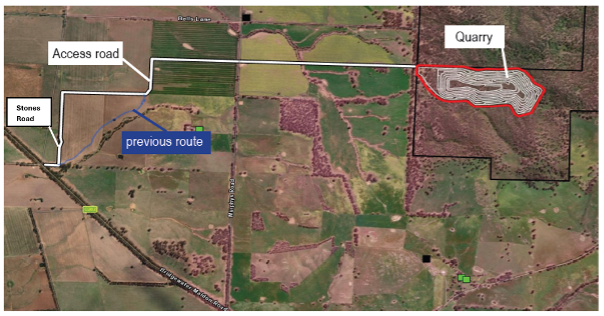
The proposed quarry access road has been designed to minimise impacts on nearby residents and the environment. The preferred route was selected to:
Minimise native vegetation clearing
Maximise separation from nearby homes
Reduce potential dust impacts
Lower transport-related carbon emissions
Avoid areas of Cultural Heritage significance
The connection to Stones Road has also been adjusted to avoid the creek and further reduce environmental impacts. The final road alignment is shown in the project plans.
-
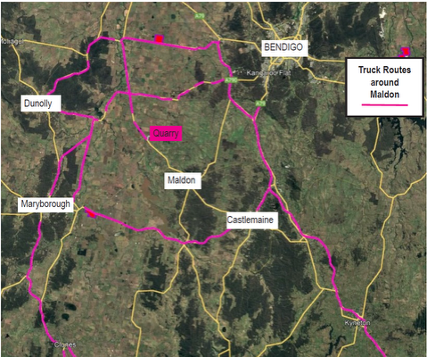
Transport routes have been selected to avoid Maldon, directing quarry traffic onto major roads that provide efficient access to key markets and infrastructure projects.
The proposed quarry is expected to generate up to 60 truckloads per day at peak production. Traffic is expected to be distributed across the road network, with approximately 5% travelling southeast and 95% travelling northwest, primarily servicing markets and projects in the Bendigo and Ballarat regions. All truck movements will be restricted to the quarry's approved operating hours. The proposed truck routes are shown below.
-
At this stage, the quarry is anticipated to have an operating life of approximately 75-100 years, depending on future demand for stone.
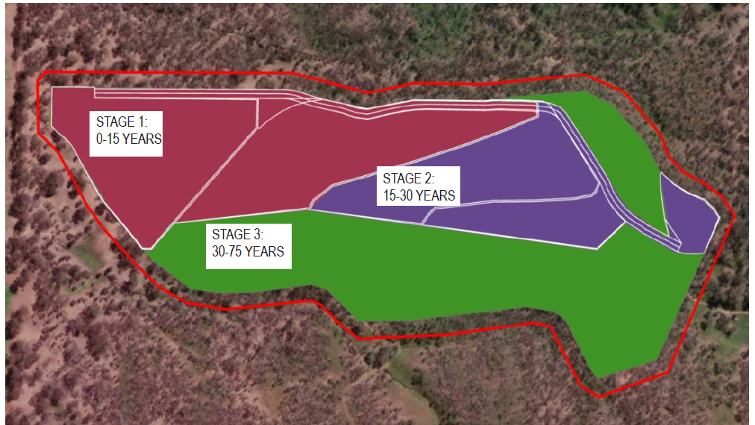
The quarry will be developed progressively in three stages:
Stage 1: 0 to 15 years, approximately 10.5 hectares
Stage 2: 15 to 30 years, approximately 8 hectares
Stage 3: 30 to 75 years, approximately 16 hectares
As each stage is completed, the area will be progressively rehabilitated in accordance with approved rehabilitation plans.
-
Blasting will be carried out under a strict Blast Management Plan designed to minimise vibration, noise and any risk of material leaving the site.
Air pressure and ground vibration levels set by Resources Victoria will be monitored to ensure all blasting remains within government guidelines that protect neighbouring properties and nearby residents.
Blasting is expected to occur approximately 8 to 10 times per year and will only take place between 9:00 am and 3:00 pm, Monday to Friday. For each blasting event there will be prior consultation with neighbours.
-
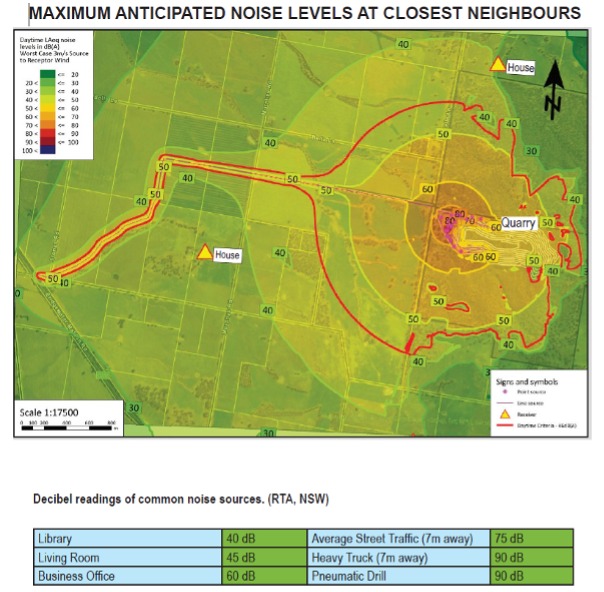
A detailed Noise Impact Assessment undertaken by specialist consultants found that quarry operations are expected to meet EPA noise limits at nearby homes.
To minimise noise, the quarry will use noise-reducing equipment and, where possible, locate processing equipment within the quarry pit below ground level. This helps reduce noise and vibration reaching surrounding properties.
The quarry will be required to comply with EPA noise standards and undertake ongoing monitoring to ensure those standards are met.
-
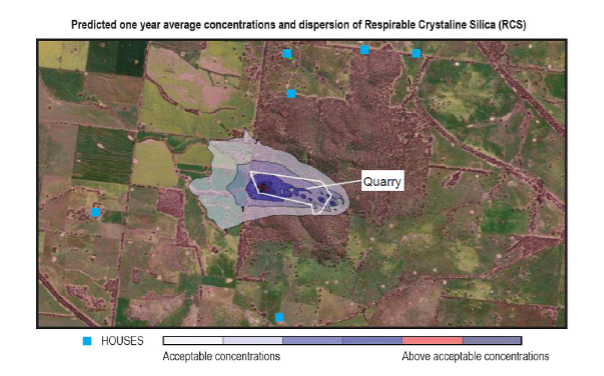
An independent Air Quality Impact Assessment found that dust levels from the proposed quarry are expected to remain within EPA guidelines at nearby properties.
The study takes into account fine airborne particles (PM10 and PM2.5), dust deposition and respirable crystalline silica. The model uses meteorological data from the closest BoM Station. Dispersion modelling shows levels of all airborne pollutants will be well within the acceptable levels set out by the EPA at each of the neighbouring houses.
To minimise dust, the quarry will operate under a Dust Management Plan that includes:
Water trucks and equipment sprayers
Sealed roads where appropriate
Low on-site speed limits
Progressive rehabilitation of disturbed areas
Dust levels will be regularly monitored to ensure the quarry continues to meet environmental requirements and minimise impacts on neighbouring properties.
-
The Dja Dja Wurrung Clans Aboriginal Corporation are the Traditional Owners of the project area and are being consulted during the development stages. The Project is subject to the requirements of a Cultural Heritage Management Plan (CHMP) to manage impact on Traditional Owner values.
Site based surveys have been undertaken in 2022 and further complex surveys are now also underway in 2026. Any identified heritage sites will be protected through a Heritage Management Plan (HMP).
-
The quarry has been designed to avoid waterways and minimise impacts on natural drainage patterns. The project will comply with all relevant guidelines and approval requirements. Based on the proposed design, neighbouring landowners are not expected to be affected by surface drainage changes.
-
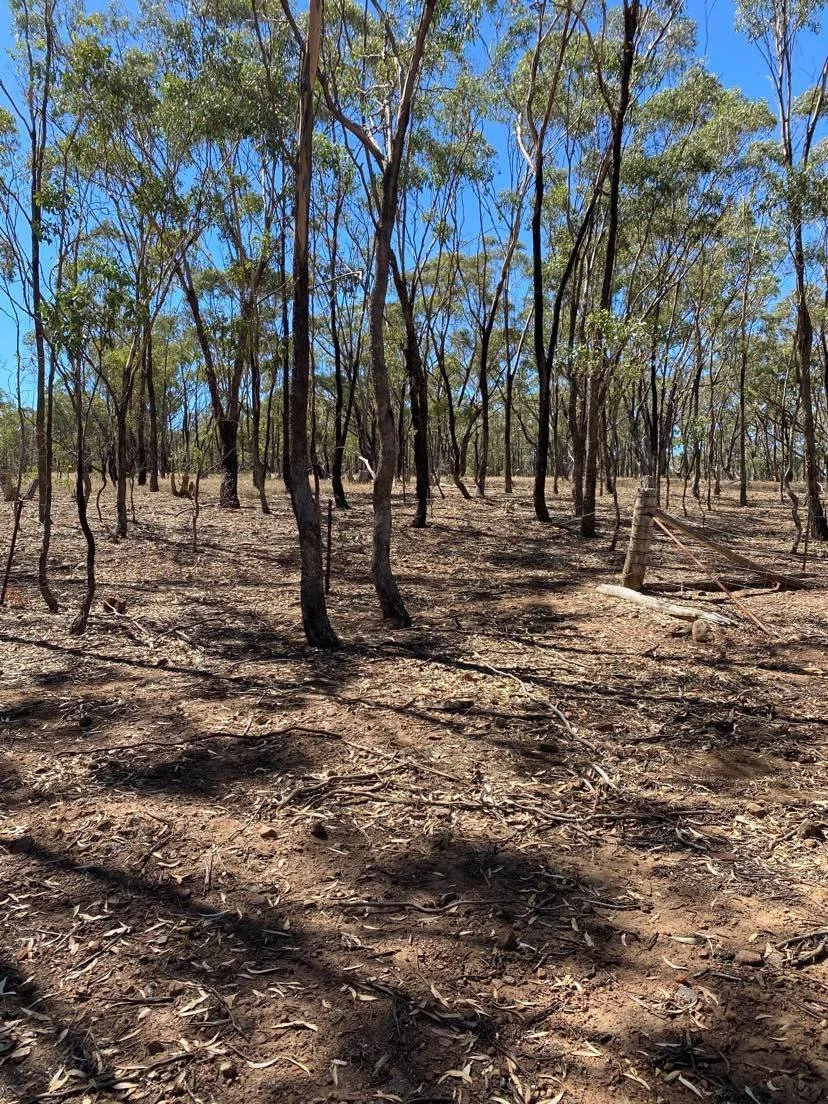
Some native vegetation will need to be removed within the proposed quarry footprint. Detailed ecological studies have been undertaken over several years to identify environmental values and inform the site design.
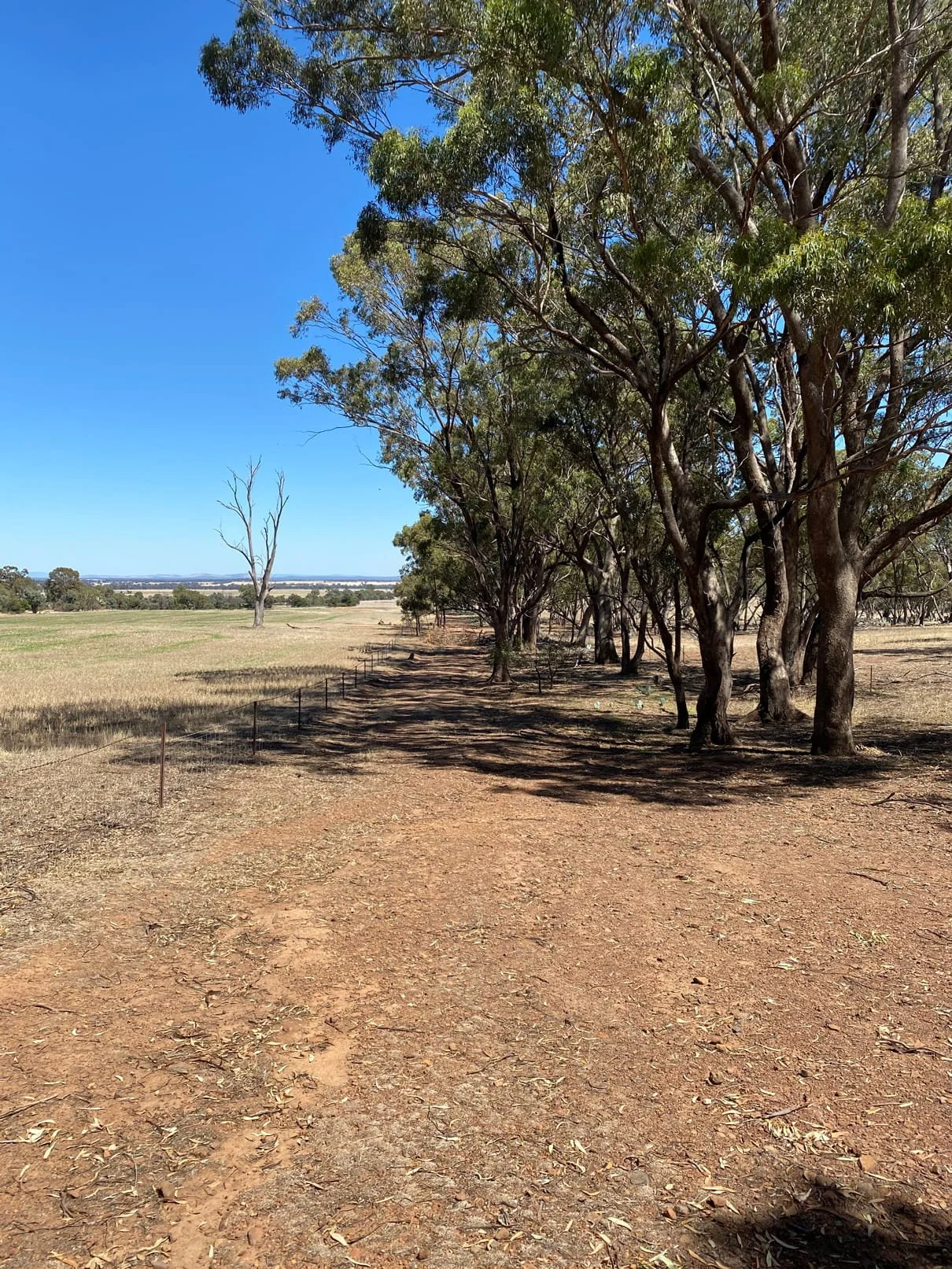
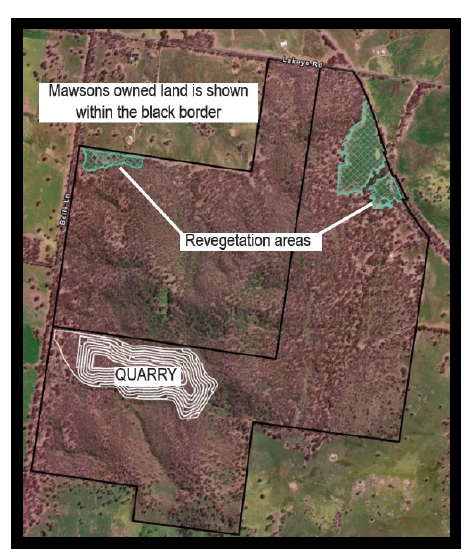
The studies have assessed the progressive removal and replacement of vegetation within the proposed 37-hectare quarry site, which is located within a 565-hectare forested landholding owned by Mawsons.
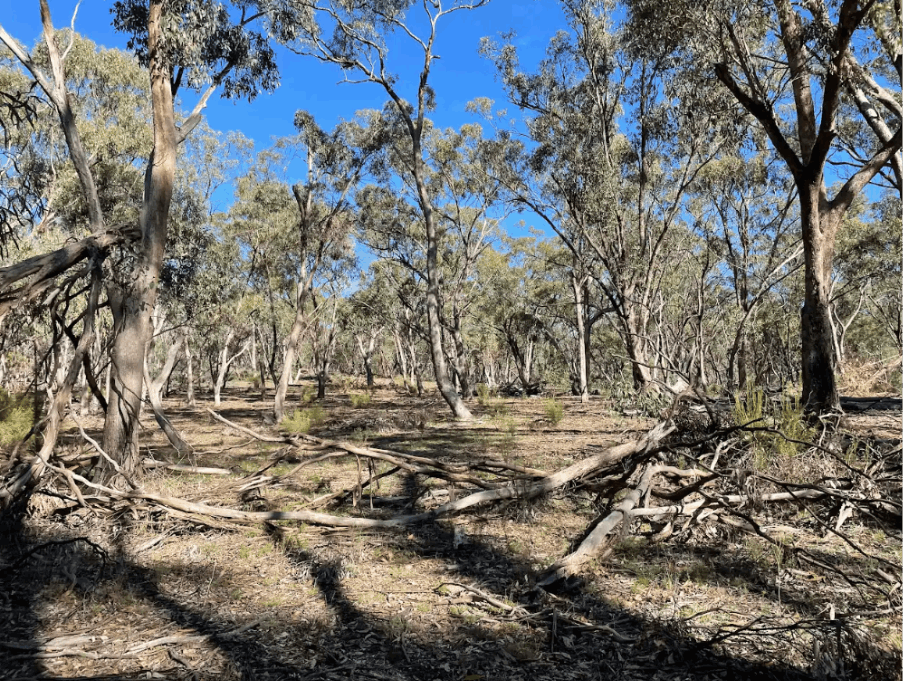
The quarry layout and access road have been designed to minimise impacts on higher-value native vegetation, including nationally listed Grey Box Grassy Woodlands and other important habitat areas. The project's approach is to avoid vegetation impacts where possible, minimise impacts where they cannot be avoided, and offset any unavoidable losses in accordance with regulatory requirements.
Environmental improvement works across surrounding Mawsons-owned land will include:
Native tree planting
Weed control - Particularly (wheel) cactus
Improved fencing
Installation of nest boxes for wildlife
More than 2,000 trees have already been planted as part of ongoing habitat enhancement and revegetation efforts, with habitat trees protected and managed to support local wildlife.
-
Protecting native plants and animals is a key focus of the project. The Environment Effects Statement (EES) process includes a comprehensive assessment of environmental impacts, including biodiversity, to identify potential risks and determine appropriate protection measures.
Extensive ecological surveys have been undertaken to identify the native species and habitats present within and around the project area. The findings from these studies will inform management plans and mitigation measures designed to avoid, minimise, and manage impacts on flora and fauna.
Community groups, Traditional Owners and other stakeholders will continue to be engaged throughout the project. Their local knowledge and ongoing involvement will help inform environmental management and rehabilitation planning.
Environmental monitoring will continue throughout the life of the project to ensure protection measures remain effective and to manage any impacts on wildlife. Quarry operations will not occur overnight, reducing disturbance to wildlife.
Progressive rehabilitation, including revegetation with native species, will provide alternative habitat and support the long-term recovery of biodiversity within the site.
-
The quarry will be progressively rehabilitated throughout its operation to ensure the final landform is safe, stable, and environmentally sustainable. Topsoil will be returned and native vegetation will be established on backfilled benches (the large, flat ledges built into the sides of a quarry – like giant steps) as soon as practicable following rehabilitation works. Once quarrying has ceased, the upper benches will be revegetated with native plant species, and an ephemeral wetland will be established on the quarry floor to support local biodiversity and manage surface water.
-
The quarry approval process is highly regulated and requires assessment by government agencies, including the Earth Resources Regulator and the Environment Protection Authority (EPA). As part of the process, all potential environmental, social and economic impacts must be thoroughly investigated.
Mawsons has completed a range of independent specialist studies covering:
Noise and vibration
Air quality
Traffic
Cultural Heritage
Surface water and groundwater
Geotechnical conditions
Biodiversity and ecology
The project was referred to the Minister for Planning on 7 March 2025 for assessment on whether an Environmental Effects Statement (EES) is required under the Environment Effects Act 1978 (EE Act). The referral, including supporting technical studies, is available at https://www.planning.vic.gov.au/environmental-assessments/browse-projects/referrals/blue-hills-quarry
A decision was made by the Minister for Planning on 3 October 2025 that an EES is required for the Blue Hills Quarry project.
The project is currently progressing through the Environmental Effects Statement (EES) process required by the Victorian Government.
Additional impact assessments and technical studies are being completed and reviewed by an independent Technical Reference Group (TRG). These studies will inform the EES and help assess the project's potential environmental, social and economic impacts.
Once completed, a draft EES will be submitted to the Department of Transport and Planning for review before being released for public exhibition and submissions.
For more information on the EES process, please visit:
https://engage.vic.gov.au/blue-hills-quarry-environment-effects-statement
Do you have a question that hasn’t been addressed? Please send us an email at: bluehillsproject@mawsons.com.au